
If you start looking around for lakefront property in South Carolina, two names come up fast: Lake Keowee and Lake Hartwell. Folks mention them in the same breath because, at a distance, they seem cut from the same cloth. Foothills of the Blue Ridge, big water, strong recreation, established home markets. On paper, they check a lot of the same boxes. They might even appear interchangeable. Time on the water makes it clear they are not.
Lake Keowee sits near Seneca and Clemson, with deep, clear water and a shoreline that was largely planned with residential use in mind. Much of its appeal comes from controlled development, protected water quality, and neighborhoods designed around long-term ownership rather than turnover. Views, dock access, and lot orientation tend to play an outsized role in pricing here. Buyers looking at waterfront homes for sale on Lake Keowee often arrive with a defined sense of what they’re looking for, because Keowee presents a narrow, well-established profile.
Lake Hartwell spreads out and makes no apologies for it. It crosses a state line, pulls water from major rivers, and behaves like the working recreational lake it was built to be. That size creates options—lots of them. Quiet pockets, busy stretches, tournament weekends, family coves, open water runs. With that range comes variation. Prices don’t move in lockstep. Use patterns change from one arm of the lake to the next. Some spots feel quiet and residential. Others see heavy seasonal traffic tied to boating, fishing, and events.
Both lakes deliver strong outdoor lifestyles and established communities, but they reward different kinds of buyers. Understanding how each lake is built, used, and regulated is the key to choosing the one that aligns with how you plan to live on the water.
Waterfront Real Estate: Lake Keowee vs. Lake Hartwell
Surrounding Environment & Views
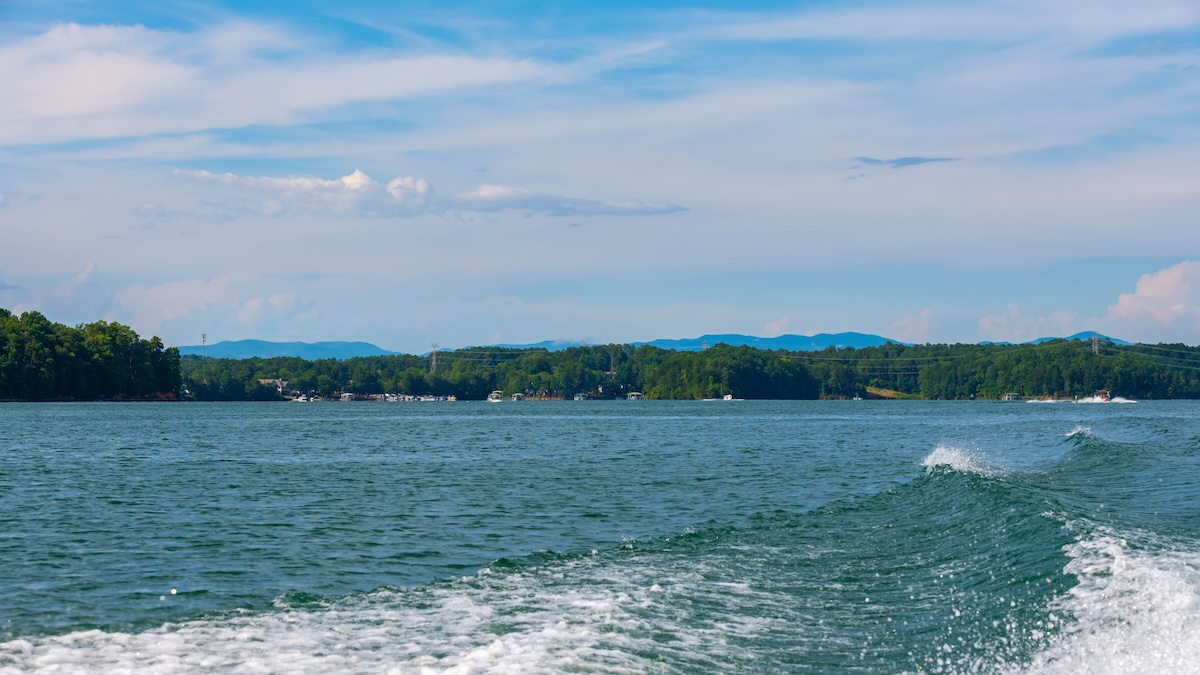
Lake Keowee’s setting is one of its defining advantages, and it shows up immediately in how the shoreline feels. The lake sits tight against the foothills, with elevation changes close to the water and ridgelines that stay visually present from most vantage points. Homes here tend to look outward toward terrain rather than across long, flat expanses. That proximity gives the views more structure—layered hills, rising backdrops, and a sense that the landscape is enclosing the lake rather than simply bordering it.
Seasonal change is pronounced. In fall, color doesn’t sit far off in the distance; it wraps the shoreline and climbs the slopes behind it, which is why Lake Keowee luxury homes for sale often emphasize glass, terraces, and outdoor rooms oriented toward the hills instead of just the waterline.
Lake Hartwell occupies a broader, more dispersed footprint. It also sits within the foothills region, but further downstream, where elevation spreads out and the terrain transitions more gradually. The landscape feels wider and less concentrated. Forested shorelines dominate, with rolling contours rather than sharp relief. In some areas, the setting reads as expansive and open, especially along longer stretches of shoreline, while in others—particularly coves—it feels more enclosed and wooded. What you generally don’t get as consistently are prominent mountain backdrops rising directly from the lake edge. The views are pleasant and natural, but they tend to emphasize water and tree line over topography.
That difference shapes how each lake feels from a home. On Keowee, the visual experience often includes depth and verticality: hills behind the house, reflections of ridgelines across the water, and changing light patterns as the sun moves over uneven terrain. On Hartwell, the emphasis shifts toward breadth—long sightlines across open water, layered tree cover, and a quieter horizon.
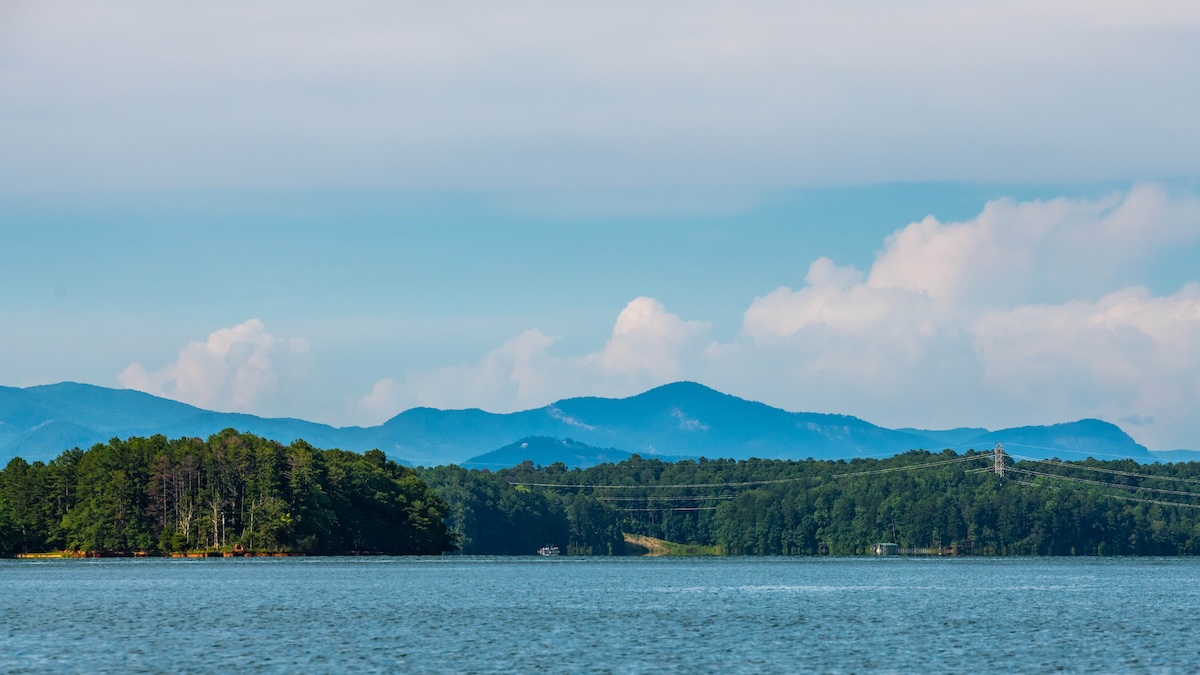
One subtle detail that adds to Keowee’s appeal is how the surrounding terrain affects atmosphere. The Blue Ridge foothills are known for the soft blue tone that settles over the landscape at certain times of day. That color comes from light scattering in the air and from natural compounds released by hardwood forests on warm days, which enhance blue wavelengths as sunlight passes through. When you’re looking across Keowee toward the hills, especially in the early morning or late afternoon, that effect becomes part of the view. It’s not dramatic in a postcard sense, but it’s persistent—and it’s one of those qualities people notice only after living with it for a while.
Water Clarity
Water clarity or “quality” is one of those things buyers react to immediately, even if they don’t consciously label it that way. You can feel it when you step onto a dock, look down into the water, or watch light move across the surface in the morning.
Lake Keowee consistently shows clearer water, and that reputation isn’t accidental. The lake is fed primarily by mountain streams flowing through largely forested terrain. Less upstream development means fewer sediments and nutrients entering the system.
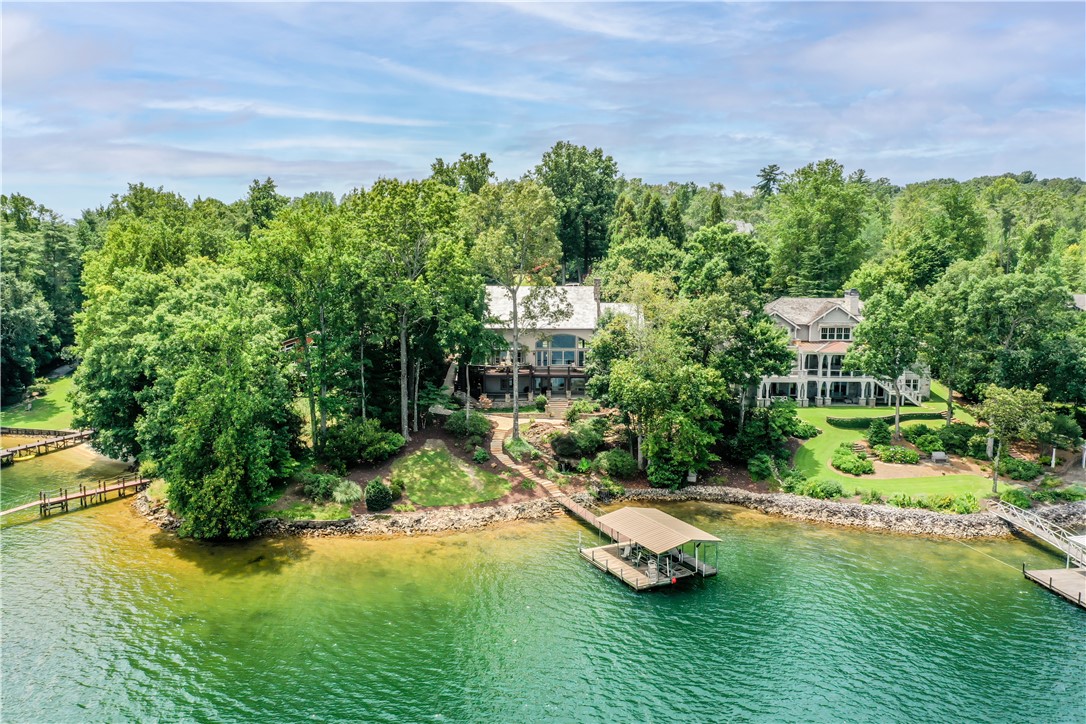
Keowee is also relatively deep for its size, which limits how much bottom material gets disturbed. The water column stays more stable, and fine particles have less opportunity to spread and hang in suspension. Over time, that translates into water that holds its clarity even during busy boating seasons.
Lake Hartwell operates on a much larger scale. It’s fed by multiple major rivers that drain a wide watershed, including developed, agricultural, and urban areas. That doesn’t mean the water is dirty, but it does mean conditions vary more from one area to another and from season to season. After heavy rain or extended runoff events, suspended sediments and nutrients can temporarily reduce visibility, especially in open sections of the lake or near major inflows. In sheltered coves, clarity often improves noticeably.
Depth and surface area play a role as well. Hartwell’s broad footprint gives wind more room to work, which can stir surface chop and disrupt reflections. Keowee’s smaller surface area and deeper profile tend to keep the water calmer, especially in protected shoreline pockets. That calmness affects how light reflects, how the lake looks from inside the house, and how much visual movement you see throughout the day.
From a homeowner’s perspective, this shows up most clearly in the view. On Lake Keowee, the water often reads as smooth and reflective, picking up sky color and shoreline detail with very little visual noise. On Hartwell, that experience depends more on location. Many properties still overlook attractive, clear water, particularly in coves and secondary channels, but open-water frontage comes with more motion and more variability.
Real Estate & Home Values

Lake Keowee’s luxury real estate market is shaped by intentional development and long-term positioning. Much of the shoreline was planned with residential use in mind, which shows up in consistent neighborhood standards, controlled density, and a housing stock that skews toward custom builds and high-end communities. Waterfront parcels are limited, and turnover is relatively low. That scarcity, combined with the lake’s reputation and water quality, has historically supported strong value retention.
Luxury homes for sale on Lake Keowee naturally tend to be priced at a premium, but that pricing reflects more than finishes. It reflects constrained supply, predictable surroundings, and a buyer pool that is typically purchasing for long-term use.
Values on Keowee also benefit from uniformity. While individual homes vary in size and style, the surrounding context usually remains stable. Adjacent properties are unlikely to introduce sudden shifts in use, density, or condition. For owners, that stability reduces downside risk and contributes to steadier appreciation over time. It’s one of the reasons Keowee is often treated less like a recreational purchase and more like a primary or legacy property.
Lake Hartwell operates under a very different market structure. Its size and shoreline length create a much broader range of housing types, from modest older homes to newer custom builds. Entry points are lower in many areas, which makes ownership more accessible, but it also introduces variability. Property condition, neighborhood consistency, and surrounding use can change noticeably from one section of the lake to another. As a result, pricing behavior is less uniform and more dependent on micro-location.
That variability cuts both ways. Some Hartwell properties appreciate well, particularly in established pockets with strong access, protected coves, or newer construction. Others track more closely with general regional housing trends rather than lake-driven premiums. For buyers, the market rewards careful selection and local knowledge. There is upside available, but it isn’t evenly distributed across the lake.
Taken together, the distinction is clear. Lake Keowee tends to command higher prices because it offers a more controlled and predictable real estate environment. Lake Hartwell offers flexibility and a wider range of price points, with appreciation tied closely to where and how you buy. The difference isn’t about which lake is “better,” but about how each market behaves—and how much certainty you want built into the value of the property itself.
Communities
Lake Keowee’s communities reflect a deliberate, top-down approach to residential development. Large portions of the shoreline were planned as cohesive environments rather than assembled piece by piece over time. That planning shows up in how neighborhoods are laid out, how amenities are integrated, and how consistent the overall experience feels once you’re inside them.
Well-known enclaves like Keowee Key, The Reserve at Lake Keowee, and The Cliffs at Lake Keowee function more like private residential ecosystems than traditional subdivisions. Golf, marina access, dining, fitness, and social spaces are all part of the fabric rather than add-ons, and the expectation of upkeep and participation is built into ownership from the start.

What distinguishes Keowee isn’t just the presence of amenities, but their consistency. Architectural standards, landscaping, shoreline treatment, and shared spaces tend to follow a common vision. That creates a strong sense of continuity from one property to the next and reinforces the feeling that you’re living within a curated environment. For many owners, especially those splitting time between multiple residences, that predictability is a feature. It removes uncertainty about how the community will evolve and what the surrounding area will look like years down the road.
Lake Hartwell has a different community structure compared to Keowee. Development here happened over decades and across a much larger geographic footprint, which naturally produced a wider mix of living situations. That means that some areas feel informal and quiet, with homes spaced farther apart and minimal shared infrastructure. Others resemble traditional neighborhoods, where year-round residents form tight local networks and daily life revolves around the lake rather than around a central clubhouse or amenity hub. There are also pockets of high-end homes on the market, but they tend to exist as individual clusters rather than as part of a unified, lake-wide development strategy. In a direct comparison, Lake Keowee clearly sets the benchmark for organized, amenity-driven, luxury residential living. The communities are polished, intentional, and designed to deliver a specific lifestyle.
Location & Convenience
Lake Keowee’s appeal isn’t just about what’s on the water—it’s also about how easily daily life fits around it. The lake sits close to established towns, with Seneca and Clemson forming a practical spine of services, dining, healthcare, and everyday errands. That proximity means you can live right on the lake and still grab groceries, meet friends for dinner, or handle routine appointments without turning everything into a planned outing. Being near Clemson also adds a steady layer of cultural and economic activity that keeps the surrounding area active year-round rather than purely seasonal.
Greenville is close enough to feel accessible without dominating the experience. It’s an easy drive for restaurants, events, or a change of pace, but far enough away that Keowee still feels distinctly removed once you’re back at the water. The result is a rhythm that works well for full-time residents and second-home owners alike: quiet when you want it, connected when you need it. Because the lake is relatively compact, most properties share similar access patterns. Commute times, errands, and service availability tend to be predictable regardless of which side of the lake you’re on.
Lake Hartwell’s geography spans a much larger area and crosses a state line, which naturally creates a wider range of access scenarios. It means some homes will sit near towns with strong amenities and easy highway connections, other waterfront homes on Lake Hartwell may be located far enough out that even basic errands require longer drives. That variability is part of the appeal for buyers who value space and separation, but it also introduces tradeoffs that depend heavily on exact location.
On the South Carolina side, areas near Anderson provide solid access to shopping, dining, and services. On the Georgia side, the draw often shifts toward proximity to larger metro areas, including Atlanta. That can be attractive, but it also means more planning around travel time, traffic patterns, and distance. Two homes on Hartwell can actually offer completely different daily experiences, based just on where they fall along the shoreline.
Lake Keowee offers a tighter, more unified relationship between lake living and nearby infrastructure. You don’t have to choose between isolation and convenience; they coexist naturally. Lake Hartwell offers more geographic freedom and variety, but that freedom comes with less uniform access and, in many cases, longer drives for routine needs.
For buyers who want lakefront living that integrates smoothly into everyday life—with minimal compromise on access, services, and time—Keowee’s location tends to work better. Hartwell remains a strong option for those willing to trade convenience for scale and separation, but Keowee’s balance is harder to replicate.
Shoreline Rules, Permitting, and Long-Term Control
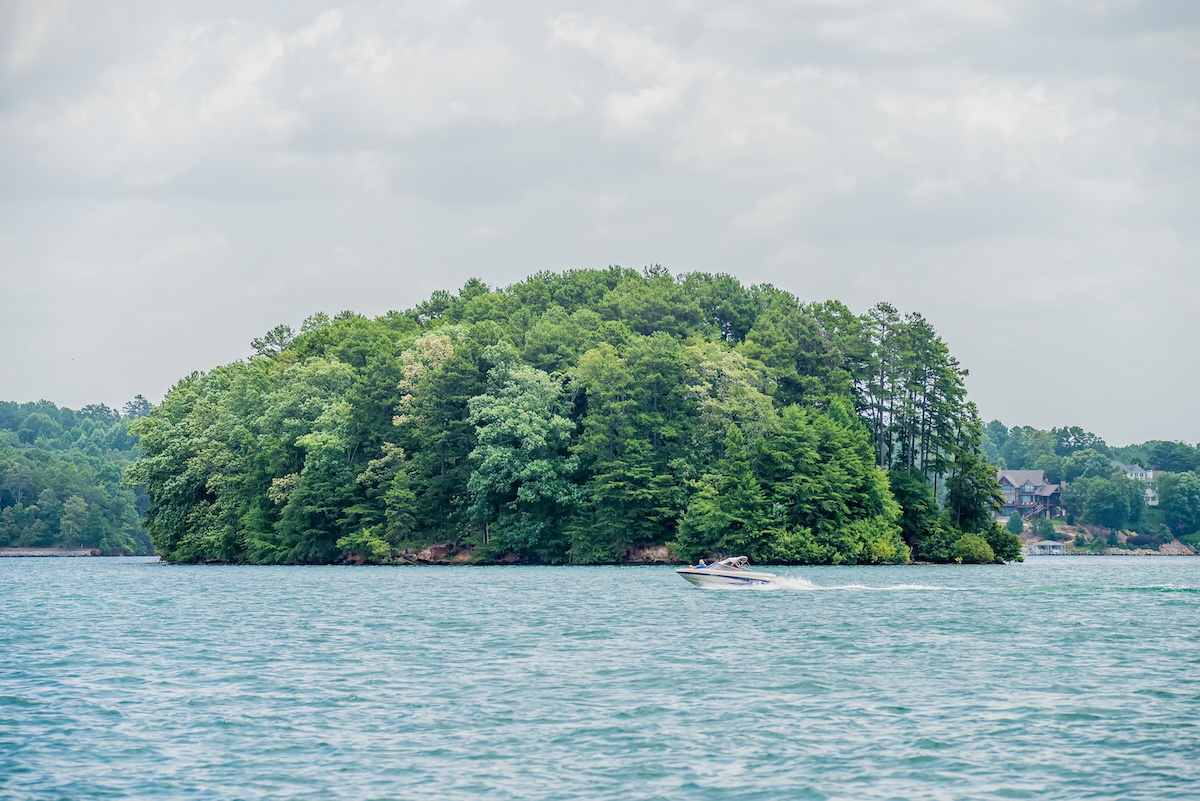
One factor that rarely shows up in listings—but tends to matter more the longer you own a lakefront property—is how shoreline rules actually work in practice. Not the headline regulations, but the lived reality of docks, shoreline improvements, approvals, and how much certainty an owner has over time.
On Lake Keowee, shoreline management can feel more internally coordinated. That’s because much of the lake was planned with residential use as a primary goal, and that intent shows up in how docks, setbacks, and shoreline treatments are handled. While approvals are still required and standards still apply, owners tend to encounter clearer expectations early in the process. Neighborhood guidelines, utility oversight, and lake management rules often align in a way that reduces surprises later. That alignment doesn’t necessarily mean that the rules are loose, it means they’re legible. Buyers can usually understand what’s allowed, what’s likely to be approved, and what will remain unchanged for years at a time.
That predictability affects how comfortable owners feel investing in docks, shoreline stabilization, outdoor structures, or long-term improvements. Even when changes are regulated, the process tends to feel contained within a known framework rather than subject to multiple overlapping authorities.
Lake Hartwell operates under a more layered structure:
- The lake’s size, its role as a federal reservoir, and its long history of mixed recreational use introduce additional variables.
- Shoreline rules can depend heavily on exact location, frontage type, and existing conditions.
- In some areas, approvals may be straightforward. In others, they can involve more coordination and longer timelines. Outcomes are often highly site-specific rather than lake-wide.
None of this automatically makes Hartwell restrictive compared to Keowee. In some cases, flexibility exists precisely because the lake supports such a wide range of uses. But from a real estate perspective, the experience can feel less uniform. Two properties with similar water access may face different constraints based on their shoreline classification or proximity to public use areas. That variability places more weight on due diligence and local familiarity.
For buyers thinking beyond the first season—those considering long-term ownership, generational planning, or substantial investment into the property—the distinction matters. Lake Keowee tends to offer a tighter, more predictable relationship between ownership and control. Lake Hartwell offers breadth and opportunity, but with more moving parts to account for.
Recreation Options
Both lakes support active outdoor use, but the experience on the water differs in ways that go beyond simple activity lists. How the lakes are shaped, how busy they get, and how the water behaves all influence what day-to-day recreation actually feels like.
Lake Keowee’s clear water immediately sets the tone. Visibility is consistently high, which changes how people use the lake. Swimming feels more inviting. Paddleboarding and kayaking are calmer, especially in the many protected coves. The water supports scuba diving and snorkeling in a way that very few inland lakes in the region can, simply because you can see where you’re going once you’re below the surface. That clarity also enhances shoreline use; docks, swimming platforms, and waterfront seating feel more connected to the water rather than separated from it.
Fishing on Keowee tends to be quieter and more deliberate. The lake supports healthy populations of largemouth bass, spotted bass, and crappie, and pressure is spread out thanks to the lake’s irregular shoreline and numerous inlets. Boat traffic exists, but it’s typically lighter and more predictable, which matters if you spend long hours on the water rather than just passing through it. The surrounding public land, including Keowee-Toxaway State Park, adds a non-motorized dimension to recreation, with trails and overlooks that let you experience the lake from above as well as on it.
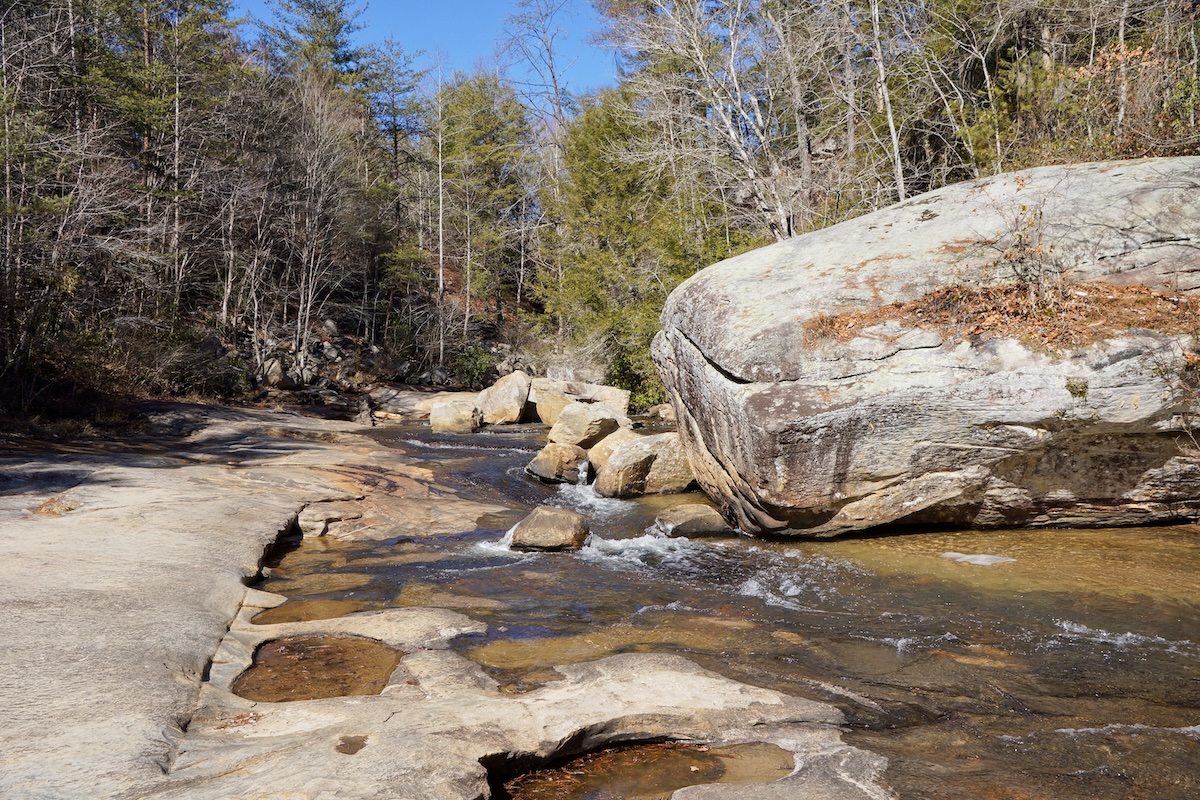
Crowding is another meaningful difference. Keowee generally stays calmer, even during peak months. There’s less commercial shoreline activity, fewer large events, and fewer stretches of uninterrupted open water that attract high-speed traffic. That restraint contributes to a quieter atmosphere overall, one that favors routine use over spectacle.
Lake Hartwell, by contrast, is built for scale. Its size supports heavy boating activity, large marinas, and frequent organized events. Fishing is a major draw, with largemouth bass, striped bass, and catfish drawing anglers from across the region, and tournaments are a regular occurrence. The lake’s open water allows for long runs, higher speeds, and group activities that simply aren’t practical on smaller lakes.
That scale also means variety. Hartwell has busy corridors and quieter arms, wide-open water and narrow coves. Finding solitude is possible, but it usually requires local knowledge and timing. During peak seasons, some areas see sustained traffic that becomes part of the background experience rather than an exception.
Keowee’s shoreline shape plays quietly to its advantage here. Its branching layout creates natural separation between sections of the lake, allowing exploration without long transits and helping disperse activity. You can move from open water into sheltered coves quickly, without feeling like you’re leaving the lake behind.
Both lakes deliver strong recreational value, but they do so in different ways. Lake Keowee supports a more intimate, low-friction experience where water clarity, calm conditions, and everyday usability take priority. Lake Hartwell supports volume and variety, with room for larger gatherings, longer runs, and organized activity. The difference isn’t about which lake offers “more,” but about how each one fits into the way you actually plan to spend time on the water.
Bottom Line

Lake Keowee is upscale without feeling stiff, impressive without trying too hard, and built for people who want their lake house to feel like a place they’ll still be proud of twenty years from now. The water’s clear enough to make you stop mid-sentence when you look at it. The hills sit close, not way off in the distance, and they frame the lake instead of just decorating it. The neighborhoods make sense. Things feel finished. You don’t spend a lot of time wondering what’s going to change next, because most of it already happened on purpose.
Lake Hartwell, on the other hand, is bigger and more unpredictable. There’s room to roam, room to experiment, and room to find something that fits you if you’re willing to look hard enough. Some stretches feel sleepy and private. Others feel busy and social. You can land a great spot, or you can land somewhere that takes a little more patience and local knowledge to love compared to a property for sale on Lake Keowee.
In other words, both lakes are good. Very good. But they’re good in different ways.
Keowee is a lake you might choose when you want the setting to carry some of the weight for you—views, water quality, neighbors, long-term value, all pulling in the same direction. Hartwell suits buyers who appreciate variety, with its breadth allowing for different interpretations of lake living, from polished to practical, with room for owners to define what matters most to them.
Neither choice is wrong. The difference lies in what you want the lake to provide. If you’re drawn to a setting that feels composed, confident, and quietly impressive the moment you arrive—and continues to feel that way years later—there’s a strong case to be made for the luxury homes for sale on Lake Keowee.