
Lake Keowee is often described as a single destination, but in practical terms it functions more like a collection of distinct residential environments tied together by a shared body of water. Where a home sits on the lake matters, but so does who manages the shoreline, how development is handled, and how close you are to the everyday conveniences that make living there easy. If you’re thinking about buying property on or near the lake, understanding those differences early saves time and prevents surprises later.
Rather than a single, uniform shoreline, Lake Keowee offers a range of living arrangements that appeal to different priorities. Some areas emphasize structure and amenities, others privacy and independence. Most buyers find that the lake’s character changes subtly as you move from south to north, and from planned communities into more lightly regulated stretches.
For buyers who want a broader foundation before comparing neighborhoods, this Lake Keowee FAQ answers many common questions about how the lake was created, how it’s managed today, and what shapes daily life around the shoreline.
Master-Planned Lake Communities
Some of Lake Keowee’s most consistent neighborhoods are also its most intentional. In these master-planned communities, shoreline appearance, amenities, and architectural continuity are thoughtfully coordinated—helping protect the look, feel, and value of the neighborhood over time—so buyers know what they’re getting, and what they’ll keep.
Lake Keowee Real Estate – Luxury Communities
A significant portion of Lake Keowee’s residential development takes place within established, master-planned communities. These neighborhoods are typically governed by homeowners/property owners associations (HOA/POA) and are designed around long-term shoreline management, architectural consistency, and shared amenities.
Within these communities, homes are often set back slightly from the water, with docks, landscaping, and shoreline stabilization handled under coordinated guidelines. The result is a shoreline that feels orderly and intentional rather than improvised. Buyers drawn to this environment tend to value predictability, maintained common areas, and access to services without needing to manage every detail individually.
Keowee Key is one of the most established examples of this style of living on Lake Keowee. Located on the southern end of the lake near Seneca, it combines waterfront homes, interior residential neighborhoods, and a full slate of amenities that include golf, dining, marinas, walking paths, and organized social programming. Its scale and longevity give it a sense of permanence that appeals to both full-time residents and long-term second-home owners.
Other planned communities around the lake operate on a smaller or more private scale, sometimes emphasizing gated access, low density, or architectural uniformity. While amenities vary, the common thread is a structured environment where the shoreline and surrounding land are actively managed to preserve long-term value.
Luxury Communities on Lake Keowee
Keowee Key

Located on the southern end of the lake near Seneca, Keowee Key stands out for its scale, infrastructure, and long-established character. It offers a full suite of amenities—golf, marinas, walking trails, lakeside dining, fitness, and organized events—all woven into a gated residential setting.
Keowee Key homes for sale range from waterfront estates to interior homes with private dock access, and the community’s architectural standards and shoreline coordination have helped preserve both property values and visual consistency. For many, it strikes the balance between active lake living and everyday convenience.
The Cliffs at Keowee Falls / Springs / Vineyards
The Cliffs communities along Lake Keowee are known for exclusivity and elevated lifestyle programming. Each neighborhood offers its own private amenities, including golf courses, wellness centers, and clubhouses, and residents can access additional privileges across The Cliffs network.
Homes here tend to emphasize custom architecture and estate-style privacy, often positioned on expansive lots with elevated lake or mountain views.
The Reserve at Lake Keowee
An upscale gated community with resort-level amenities, The Reserve includes a Jack Nicklaus Signature Golf Course, clubhouse, village area, marina, and fine dining.
The neighborhood’s aesthetic leans traditional, with a focus on crafted architecture and preserved natural surroundings. It attracts second-home buyers as well as those seeking club membership experiences. Homes and homesites often carry premium price tags, with a strong emphasis on community cohesion and curated lifestyle.
Waterford Communities
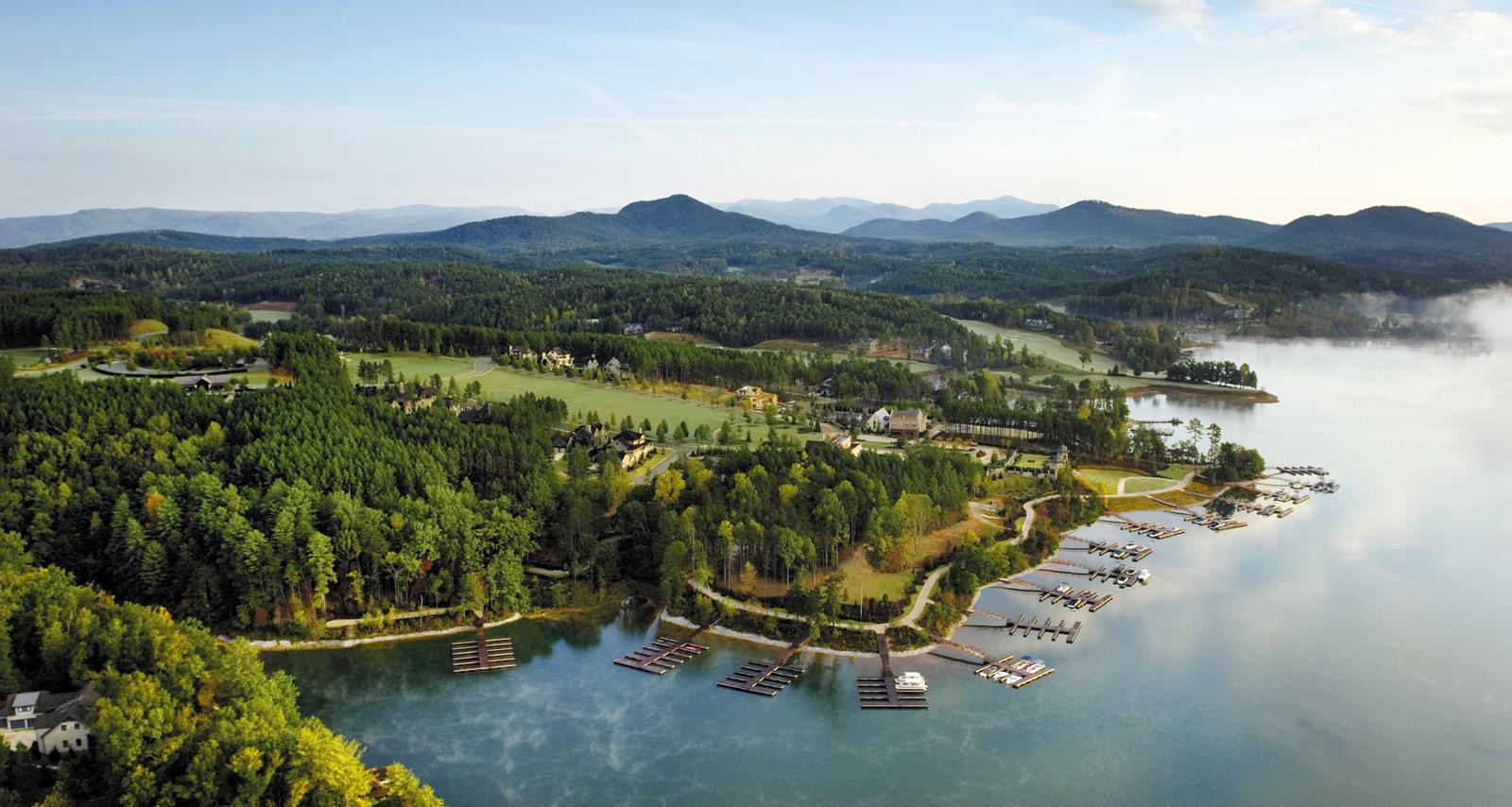
The Waterford neighborhoods—Waterford Pointe, Waterford Ridge, and Waterford Estates—offer large lakefront lots, custom homes, and a strong sense of architectural consistency without overwhelming density. These communities are not gated but are HOA-managed, with amenities such as a clubhouse, pool, and tennis. The emphasis here is on spacious waterfront living within a well-organized, attractive setting. Many homes enjoy deep water, long views, and private dock access.
Crescent Communities (Various)
Crescent Communities developed several mid-sized, well-managed neighborhoods along the lake, each with its own POA structure, dock guidelines, and architectural covenants.
While not as expansive as Keowee Key or The Cliffs, these communities benefit from consistent planning and offer access to deep-water lots with private docks. Amenities vary by neighborhood, but the emphasis tends to be on livable, well-kept residential environments that feel cohesive without being restrictive.
Private Waterfront Properties
Outside of planned developments, Lake Keowee also includes privately owned waterfront parcels that operate without community-level governance beyond county regulations and Duke Energy’s shoreline management policies. These properties tend to offer greater flexibility in home design, landscaping, and day-to-day decision-making.
Buyers who prefer this route are often drawn to the sense of independence and privacy it provides. Homes may sit on larger lots, with fewer visible neighbors and a more natural shoreline feel, especially in quieter coves or farther north on the lake.
That flexibility does not mean a lack of oversight. Dock placement, shoreline stabilization, vegetation management, and construction near the water are still regulated at the lake level. The difference is that decisions are handled property by property rather than through a homeowners association.
South vs. North End of the Lake
Geography plays a meaningful role in how neighborhoods around Lake Keowee feel. The southern end of the lake, closer to Seneca and Clemson, tends to have higher residential density, quicker access to shopping and services, and more established community infrastructure. This area often appeals to buyers looking for convenience and an active lifestyle anchored by the lake.
As the shoreline extends northward, development thins out. Homes are more spread apart, boat traffic decreases, and the surrounding terrain becomes more wooded and elevated. This part of the lake feels quieter and more secluded, with longer drive times balanced by increased privacy and a stronger connection to the surrounding foothills.
Neither setting is inherently better, they simply support different priorities. Many buyers will find that their ideal location depends on how often they plan to be at the lake and how they expect to use it day to day.
How the Community Affects the Lifestyle
The distinction between community-governed and privately held property affects more than HOA rules. It shapes how the shoreline looks, how docks are spaced, how common areas are maintained, and how consistent neighboring properties may feel over time.
Planned communities tend to reduce uncertainty. Changes happen slowly, standards are enforced, and large-scale alterations are uncommon. Independent properties offer more autonomy but require a greater level of personal involvement, especially when navigating permits, contractors, and long-term maintenance.
For many buyers, the decision comes down to how much structure they want built into the living experience. Lake Keowee accommodates both approaches, which is a key reason its residential market remains stable across different buyer profiles.
Matching Lake Areas to Lifestyle
Different parts of Lake Keowee tend to appeal to different kinds of buyers. The amenities, layout, and access vary just enough that it’s worth knowing how the areas differ before narrowing your search.
For Full-Time or Long-Term Living
Buyers planning to live at the lake year-round often gravitate toward well-established communities with a complete range of amenities and infrastructure. Neighborhoods like Keowee Key stand out for their walkability, everyday conveniences, and strong community involvement—all without sacrificing lake access. These areas support not just vacation living, but day-to-day life.
For Privacy and Elbow Room
Those looking for space, flexibility, or minimal HOA oversight often consider the northern stretches of the lake or independent parcels outside the major communities. These properties feel more remote, with fewer neighbors and a quieter shoreline, especially in deep coves.
For Resort-Style Amenities
If club access, golf, and curated lifestyle programming are the goal, then The Reserve or the Cliffs at Keowee may align better. These gated communities offer a higher degree of exclusivity and feature multiple tiers of membership options, often with a second-home or seasonal pace. Keowee Key offers many of the same resort-style amenities as higher-profile communities, but feels more like a year-round residential community with an active full-time population, in contrast to The Cliffs or The Reserve, which can feel more seasonal or club-oriented.
For Convenience and Quick Access
Homes closer to Seneca or Clemson provide faster access to shopping, healthcare, and restaurants. That’s often a deciding factor for buyers who plan to travel frequently or split time between homes.
For Deep Water and Long Views
If boating, dock depth, or wide-open views are high on the list, you’ll want to focus on lots with main channel exposure or well-positioned coves that don’t dry down seasonally. These can be found throughout the lake but are often easier to secure in the more developed southern half.
Finding Luxury Homes for Sale on Lake Keowee

Understanding neighborhoods and communities around Lake Keowee is less about labels and more about alignment. The lake supports full-time residences, seasonal homes, and long-term investments, each with slightly different needs. Community governance, location, and shoreline character all influence how a property functions beyond its square footage or view.
Lake Keowee has developed with a level of planning that’s rare among Southeastern lakes. Much of the shoreline is already spoken for—shaped by established communities, long-standing covenants, and decades of residential growth. For buyers, that means fewer unknowns and more clarity about what each part of the lake offers.
Ultimately, the best results come from focusing on the parts of Lake Keowee that reflect how you plan to live. Whether your priorities center on amenities, privacy, water access, or proximity, knowing what each area offers makes the search more purposeful—and the outcome more rewarding.