
Lake Keowee has a way of inviting curiosity long before anyone starts looking at maps, listings, or shoreline photos. Its name comes up in conversations about clear water, mountain views, boating weekends, fishing spots, and lakefront communities, and it tends to spark the same set of questions over and over. Where did the lake come from? Why does the water look the way it does? How big is it, how is it managed, and what’s close by?
This guide pulls those questions together in one place and walks through them at a comfortable pace. We’ll go over the lake’s history, how and why it was created, how it’s managed today, and what defines its geography, recreation, and surrounding land. Along the way, we’ll also answer some common questions about water quality, swimming, fishing, boating access, parks, wildlife, residential development, and more.
Lake Keowee Overview
Lake Keowee is pronounced KEE-wee by locals — commonly said as “Lake Kiwi.” The pronunciation has emphasis on the first syllable and the final sound shortened rather than fully articulated.
Pronunciation
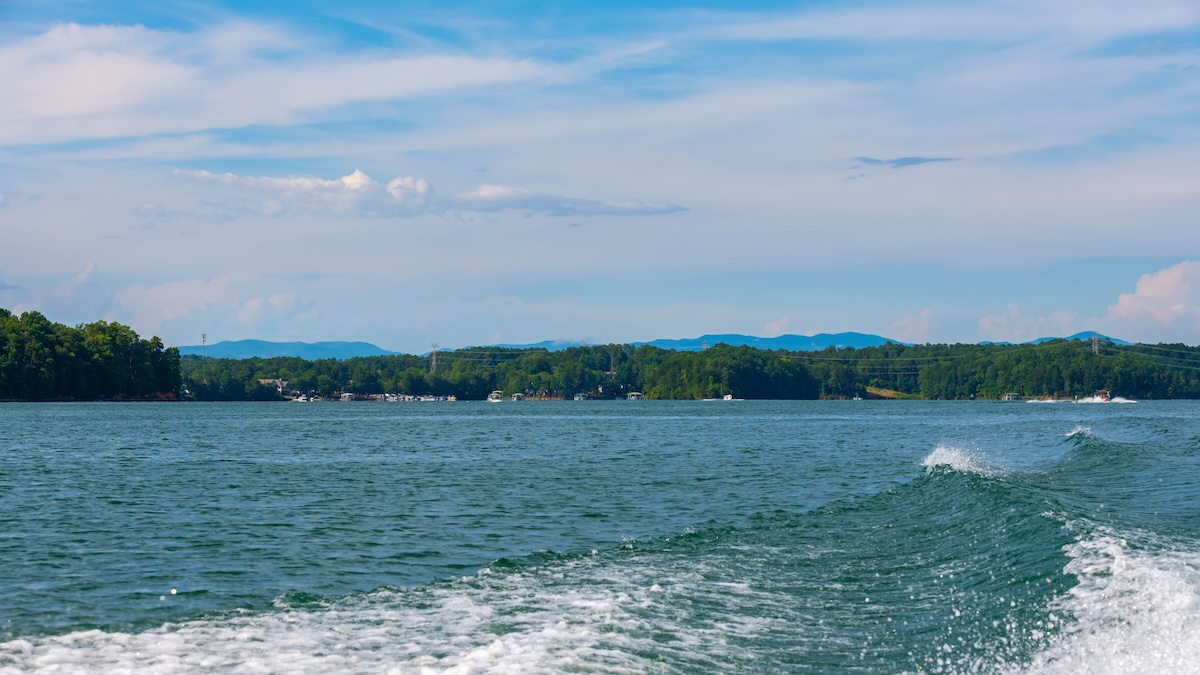
Lake Keowee sits in the foothills of the Blue Ridge Mountains in Upstate South Carolina and is widely recognized for its depth, clarity, and managed shoreline development.
The lake spans parts of Oconee and Pickens counties and serves multiple purposes, including power generation, water management, recreation, and residential use. Over time, it has also become one of the most established lakefront real estate markets in the region, shaped by long-term planning, shoreline regulations, and a mix of private ownership and managed communities. As a result, information about Lake Keowee luxury homes is often sought alongside broader questions about how the lake functions, how development is regulated, and what day-to-day life around the water actually looks like.
Where Did the Name “Keowee” Come From?
The name Keowee comes from the Cherokee language and traces back to a historic Cherokee town that once stood in this part of the Upstate long before the lake existed. That settlement, also called Keowee, was one of the Cherokee “Lower Towns” and served as an important center for trade, travel, and daily life in the region.
Linguistically, Keowee is most commonly translated as “Place of the Mulberries,” sometimes rendered more loosely as “mulberry grove place.” Mulberry trees were abundant in the area and played a role in food, materials, and daily use, making them a natural point of identification for the settlement and the land around it.
When Lake Keowee was created in the 20th century, the name was carried forward to reflect the area’s deeper history rather than introduced as something new. While exact translations from Cherokee can vary slightly depending on interpretation, the connection to mulberry trees and the original Cherokee town is consistent across historical records. And today, the name serves as a direct link to the pre-colonial history of the region and the people who lived along these waterways long before dams, shorelines, or modern development reshaped the landscape.
Historical Context
How (and Why) the Lake Was Created
Lake Keowee is a man-made lake, created as part of a large, coordinated energy and water-management project developed by Duke Power, now Duke Energy. The planning for this system began in the 1960s, during a period when utilities across the Southeast were expanding generation capacity to meet long-term regional demand. Early groundwork took place in the late 1960s, with major construction activity occurring through the early 1970s.
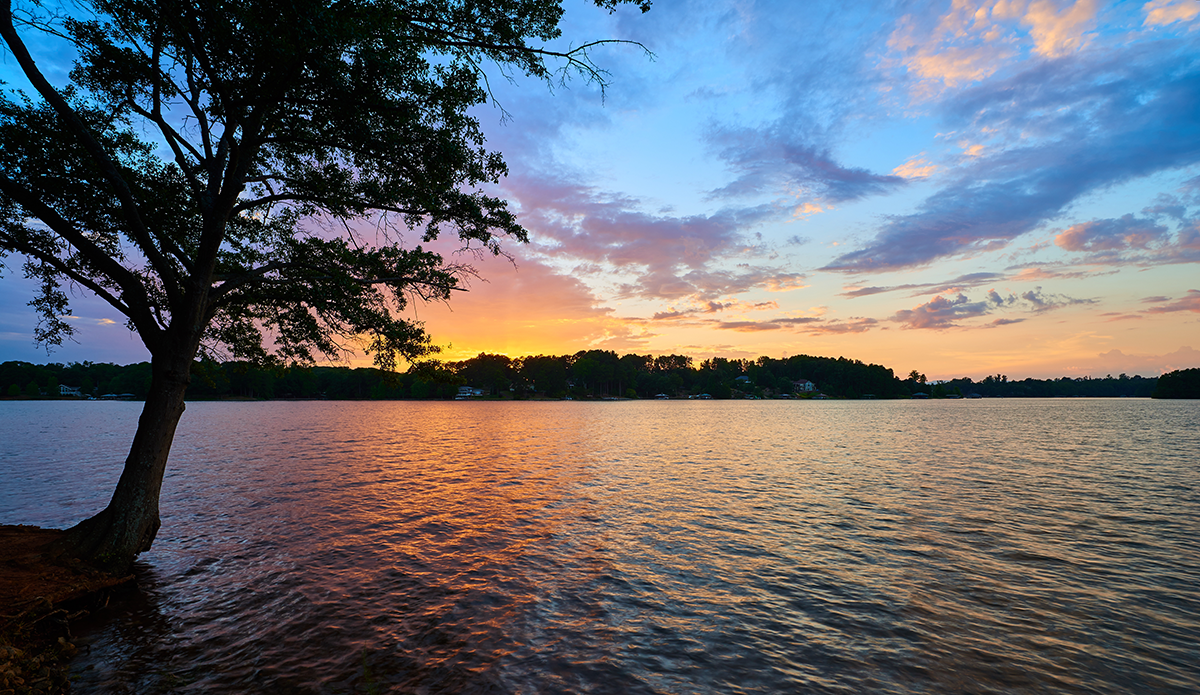
The lake was formed by the construction of two main structures: Keowee Dam on the Keowee River and Little River Dam on the Little River. These dams flooded a broad valley system, creating what is now Lake Keowee. At the same time, Duke Power was developing a much larger and deeper reservoir upstream—Lake Jocassee—created by Jocassee Dam.
Together, Lakes Keowee and Jocassee function as a connected, engineered system rather than independent bodies of water. Lake Jocassee was designed as a high-elevation storage reservoir, while Lake Keowee serves as both a hydroelectric resource and a downstream balancing lake. Water can be released from Jocassee to Keowee to generate power and manage flow, making the two lakes operationally linked.
One of Lake Keowee’s central roles has been providing a reliable cooling water source for nearby nuclear generating facilities. Its size, depth, and controlled water levels made it well suited for that purpose, which strongly influenced both its design and long-term management. This functional requirement is a major reason the lake exists in its current form and why its water levels and shoreline development are carefully regulated.
Key Context
At the time, the combined project represented an enormous financial and engineering undertaking, with reported costs in the hundreds of millions of dollars. When viewed through modern economic comparisons, the scale of investment places it among the most significant infrastructure projects ever built in the region. Because inflation calculations vary, it is best described broadly as a multi-billion-dollar equivalent investment by today’s standards.
Although energy production and water management were the primary drivers behind Lake Keowee’s creation, recreational use was intentionally included from the beginning. Public parks, designated access areas, boat ramps, and shoreline management policies were built into the original planning rather than added as an afterthought. This foresight laid the groundwork for the lake’s later evolution into a major recreational and residential destination.
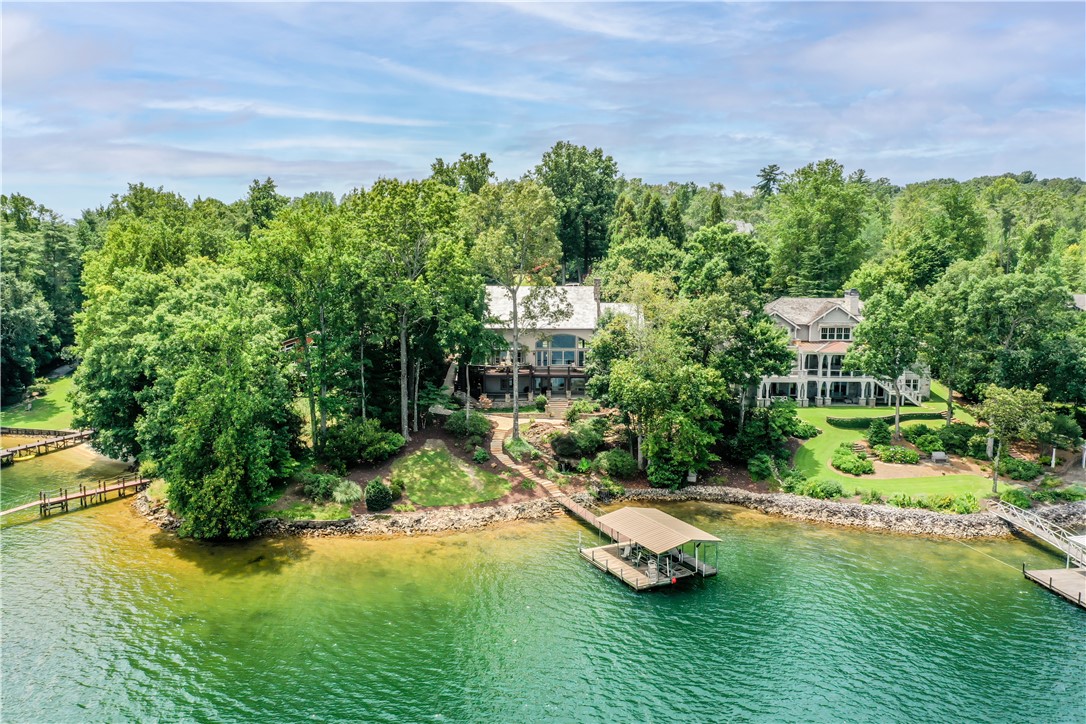
Duke Energy continues to own, operate, and manage Lake Keowee today. Over the decades, residential development and recreational use have expanded steadily, particularly along the southern and central portions of the lake. Master-planned communities, private docks, marinas, and lakefront homes now coexist alongside the lake’s ongoing operational role, making Lake Keowee both a critical piece of regional infrastructure and a defining feature of the surrounding landscape.
Water Management
Lake Keowee is known for its water clarity and overall water quality, which result from several factors rather than any single program or initiative. These include regulated shoreline development, limited industrial and agricultural runoff within the watershed, substantial depth and water turnover, and coordinated watershed planning and oversight.
The Lake Keowee Source Water Protection Team (LKSWPT) was established in 2017 and remains active. Its role includes monitoring water quality trends, coordinating with local governments and utilities, and supporting policies and planning efforts designed to protect the watershed over the long term. Duke Energy also plays an ongoing role through shoreline management, environmental stewardship programs, and support for watershed protection initiatives.
Volunteer groups and local organizations contribute through shoreline cleanups, debris removal, and community stewardship efforts. While these activities are helpful, the lake’s overall condition is primarily driven by hydrology, depth, land-use controls, wastewater and septic regulation, and coordinated management across agencies and stakeholders.
Geography
Lake Keowee stretches approximately 26 miles in length and reaches widths of up to 3 miles in certain areas. The shoreline extends for roughly 300 miles when accounting for coves and inlets. The lake features a wide main channel with numerous branching arms and protected coves.
From an aerial perspective, the lake’s structure resembles a central trunk with multiple offshoots. This layout provides both open water areas and more secluded sections.
The northern end of Lake Keowee tends to be less developed, with fewer homes and lower boat traffic. As the lake extends south, residential density, marina access, and recreational activity increase.
Proximity to Nearby Towns and Cities
Lake Keowee’s location is best understood in terms of zones rather than a single point. The southern end of the lake sits immediately adjacent to Seneca, while the lake stretches northward into more rural and mountainous terrain. Because of this layout, drive times and distances vary depending on where a home or community sits along the shoreline.
That said, the lake maintains strong proximity to both everyday services and larger regional centers, which is a key part of its long-term livability.
| Location | Driving Distance to Lake Keowee | Additional Information |
|---|---|---|
Seneca, SC |
Directly adjacent to the southern end |
Primary service hub; groceries, dining, retail, medical offices |
Clemson, SC |
Short drive from the south/central lake | University town; dining, sports, cultural events |
| Pickens, SC | Moderate drive from central/northern lake | County services, access to foothills |
| Anderson, SC | Regional drive | Hospital systems, expanded retail, business services |
| Greenville, SC | Under an hour from most of the lake | Major metro; healthcare networks, airport, dining, arts |
| Asheville, NC | Longer regional drive | Mountain city; dining, culture, tourism |
| Atlanta, GA | Half-day drive | Major international airport, corporate services |
| Charlotte, NC | Half-day drive | Banking center, international airport |
For residents on the southern half of Lake Keowee, Seneca functions almost like a lakeside extension of daily life. Grocery runs, appointments, dining, and errands are quick and routine. Clemson adds another layer nearby, with university-driven amenities and events.
As you move north on the lake, the setting becomes more secluded, but access doesn’t disappear — it just stretches slightly. Greenville remains within reasonable reach for specialized healthcare, business travel, and flights, while larger cities like Atlanta and Charlotte stay accessible without pulling the lake into a commuter-oriented orbit.
Wildlife

Lake Keowee sits right at the meeting point of managed water and wild country, and that shows up in the wildlife you’ll see around the shoreline and coves. The surrounding hardwood forests and rolling foothills support white-tailed deer, wild turkey, foxes, raccoon, and plenty of smaller mammals that move quietly through the trees and along the water’s edge. Early mornings and evenings are when the lake really feels alive.
Wildlife Context
Birdlife is one of Keowee’s strongest wildlife features. Ospreys patrol open water looking for fish, herons stalk the shallows with slow, deliberate steps, and bald eagles are a regular sight, especially near quieter stretches of shoreline and protected coves. Seasonal waterfowl pass through during migration, and songbirds fill in the background year-round.
In and around the water, turtles are common, often stacked on fallen logs or sunning themselves along the banks. Non-venomous water snakes and other reptiles show up as well, particularly in feeder creeks and less-developed areas where vegetation reaches the waterline. Amphibians thrive in these same zones, especially after warm rains.
Lake Keowee is not considered a permanent alligator habitat. The water temperatures and seasonal patterns don’t support a stable population. That said, an occasional alligator does turn up from time to time, usually during warmer months. These are transient animals moving through connected waterways rather than residents, and sightings are sporadic and unpredictable rather than routine.
The lake is actively managed, but large stretches of shoreline remain protected through parks, preserves, and development controls. That combination allows wildlife to persist without turning the area into an unmanaged wilderness. It’s a place where you can watch an eagle work a cove and hear turkeys calling from the ridges.
Fishing on Lake Keowee

Lake Keowee supports a diverse fish population and is a popular destination for fishermen. Species commonly found in the lake include largemouth bass, smallmouth bass, spotted bass, catfish, crappie, and various panfish such as bluegill, bream, and yellow perch.
Trout are also present, particularly brown trout and rainbow trout. These fish are most often associated with deeper, colder sections of the lake and areas influenced by upstream water releases from Lake Jocassee rather than being evenly distributed throughout the entire body of water.
Lake Keowee also holds striped bass and hybrid striped bass. These fish are typically associated with deeper water, open channels, and areas influenced by current or temperature changes. They tend to be more seasonal and pattern-driven than shoreline species, but they are a relevant part of the lake’s fishery for fishermen who focus on deeper or pelagic zones.
Fishing pressure varies by season and location, with coves, points, and deeper channels offering different opportunities depending on conditions.
Boating and Water Access
Boating is one of the lake’s primary recreational uses. The size and layout of Lake Keowee support everything from small fishing boats and kayaks to larger recreational vessels. Waterskiing and wake sports are common in wider sections of the lake, while paddling activities are more common in protected coves and quieter areas.
Public boat access is available through multiple maintained ramps located around the lake. These include:
- Cane Creek
- Crowe Creek
- Fall Creek
- High Falls
- Keowee Town Landing
- Mile Creek
- South Cove
- Stamp Creek
- Warpath Access
In addition to public ramps, private marinas and residential community facilities provide access for homeowners and members.
Swimming & Recreational Use
Swimming is permitted throughout Lake Keowee and is a common activity during warmer months. The lake’s depth, water movement, and management practices support a wide range of recreational uses, including boating, waterskiing, wake sports, kayaking, and paddleboarding.
Parks, Waterfalls, and Natural Features
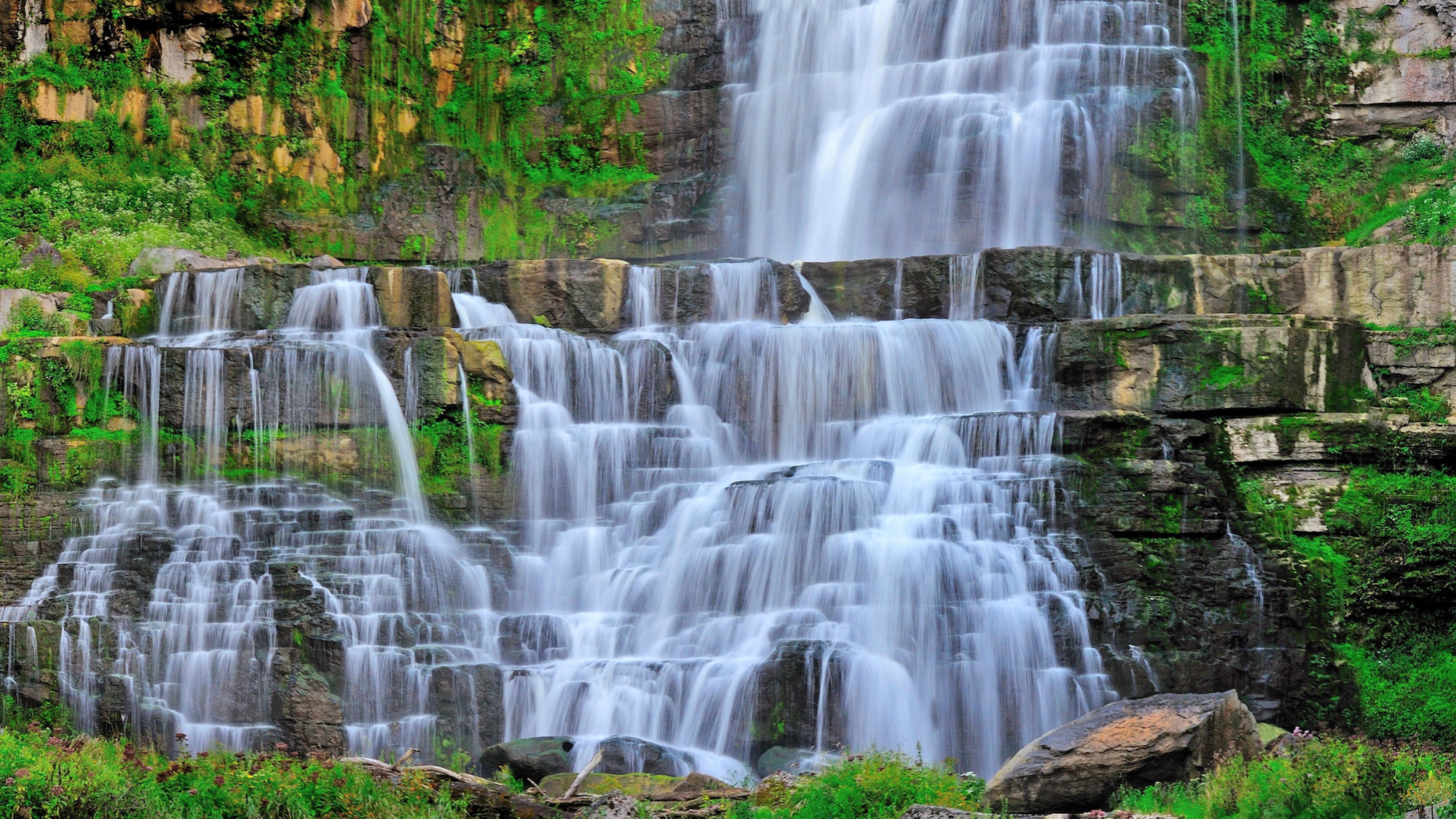
The area surrounding Lake Keowee includes a mix of forested land, rolling terrain, and mountain foothills. Waterfalls are a notable feature, especially in coves and tributaries connected to higher elevations. Waterfall Cove is a well-known location where boats often anchor to view cascading falls along the shoreline.
Keowee-Toxaway State Park sits on the northern end of Lake Keowee and covers roughly 1,000 acres of protected land. The park plays an important role in preserving the more undeveloped character of the lake’s upper reaches, where forested shorelines, higher elevations, and cooler water influence the surrounding landscape.
Within the park, visitors will find a network of hiking trails, designated lake access points, and elevated viewpoints that look out across the water and into the surrounding foothills. Waterfalls and streams feeding into the lake add to the park’s appeal while also highlighting the natural systems that shape this portion of the watershed.
Beyond the state park, several additional public parks and protected areas are tied into the broader Lake Keowee system. High Falls Park and Mile Creek Park provide shoreline access, boat ramps, and day-use facilities that support boating and water recreation while maintaining controlled development along the lake’s edge. South Cove Park serves as a major access point on the southern end of the lake and functions as both a recreational hub and a managed shoreline buffer.
The Eastatoe Creek Heritage Preserve, managed by the South Carolina Department of Natural Resources, adds another layer of protection within the watershed. As a designated wildlife preserve, it focuses on conservation and habitat protection rather than recreation, helping to safeguard water quality and ecological balance in the tributaries that feed the lake.
These areas contribute to public access, conservation, and long-term environmental protection.
Real Estate and Living on Lake Keowee
Lake Keowee has evolved into a mature and carefully regulated residential market, shaped as much by long-term planning as by demand for waterfront living. Housing options span a wide range, including condominiums and townhomes within established communities, single-family homes in planned developments, and large custom-built estates positioned directly on the shoreline. This allows for different lifestyles while maintaining a relatively consistent standard of development around the lake. Homes for sale in Keowee Key and other master-planned neighborhoods offer luxurious amenities, managed shorelines, and coordinated architectural standards.
Elsewhere, privately owned waterfront parcels provide a more individualized setting, often with personal docks and expansive views, while still operating within lake-wide management rules that preserve shoreline character and water quality.
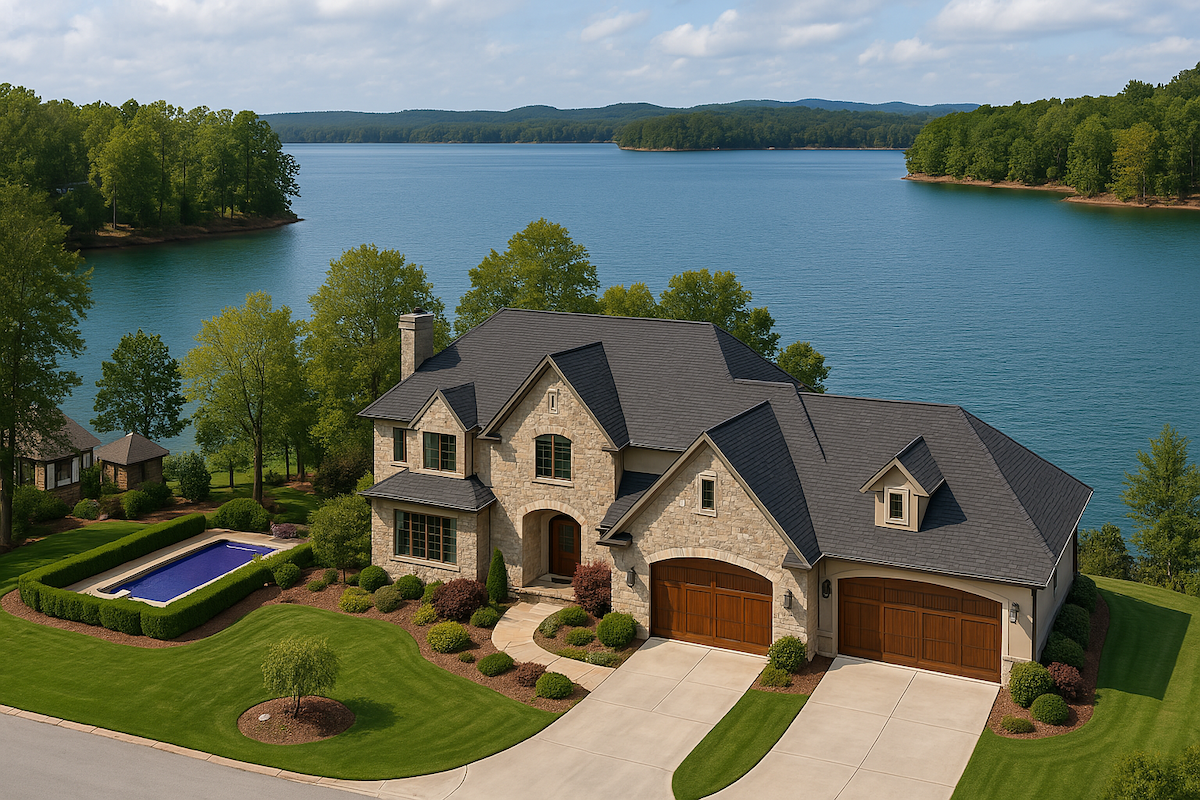
Development around Lake Keowee is governed by a combination of community-specific covenants, county regulations, and Duke Energy shoreline management policies. These layers of oversight influence everything from dock placement and shoreline stabilization to vegetation management and building setbacks.
While this regulatory framework can feel complex to newcomers and those moving to Lake Keowee, it also plays a very important role in protecting local property values, limiting overcrowding, and preventing the kind of unchecked development seen on many other large reservoirs.
Property values and access privileges vary significantly depending on location, lake orientation, community governance, and proximity to amenities such as marinas, parks, and deep-water channels. Some areas prioritize privacy and low-density living, while others offer more social, amenity-driven environments. Because of these differences, localized research is especially important for anyone considering long-term residence, investment, or retirement on Lake Keowee.
The area surrounding the lake is defined by controlled growth, protected viewsheds, and a balance between private enjoyment and shared stewardship—qualities that continue to distinguish Lake Keowee from many other lakefront markets in the Southeast.